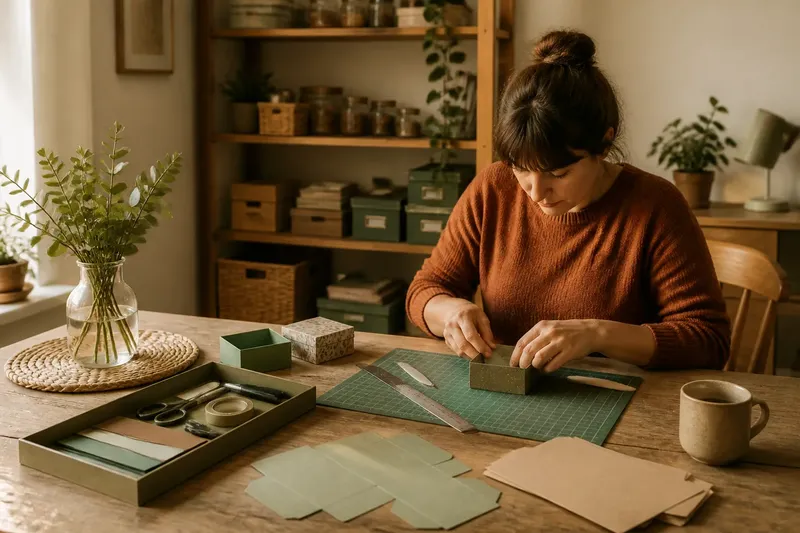
A First Market Table with One Clear Point of Focus
A first market table with one clear point of focus helps visitors understand a maker’s work quickly, without crowding the display or hiding the details.
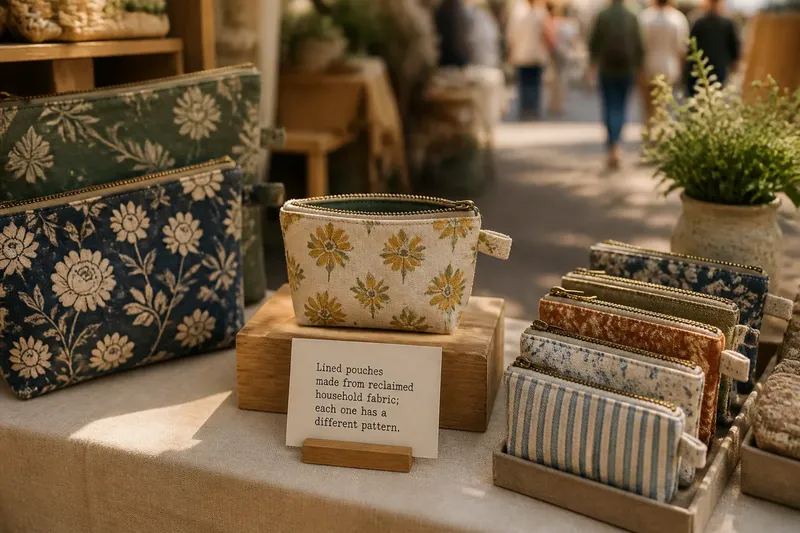
A first market table with one clear point of focus gives a passer-by a simple reason to pause. For a maker bringing a small collection to a local market, that focus can be one representative object, placed where it is easy to see and supported by a brief description. The display does not need to explain everything at once; it needs to offer a clear first way into the work.
Say you make small fabric pouches from reclaimed household textiles and have booked a table at a neighbourhood craft market. You have several sizes, patterns and finishes, but the table is narrow and visitors will be moving past it. The planning question is not how to show every option. It is which object can introduce the work honestly, and how the rest of the display can help a visitor understand it.
Choose the object that can speak for the collection
Pick a piece that represents the qualities you want people to notice across the range. That might be the careful lining, the visible character of the reclaimed cloth or a useful shape that appears in several designs. The representative object should be a real item you are offering, not a special prop that suggests a different level of finish or a feature that the other pieces do not share.
Imagine the maker chooses a compact, lined pouch in a fabric with a clear pattern. Its stitching is visible, its opening can be shown without handling, and the same construction appears in the larger pouches on the table. It gives visitors a concrete starting point while leaving room to explain that fabrics and sizes vary.
Check the choice against a few practical questions:
- Can someone recognise its shape from the aisle?
- Does it show a quality that matters across the collection?
- Can a visitor understand its intended use without a long explanation?
- Does it accurately represent the finish of the other pieces?
- Can you display it securely without blocking access to the rest?
If an item is striking but unlike the rest of the work, it may draw attention in the wrong direction. Choose the piece that makes the collection easier to read, rather than the one that merely has the loudest colour.
Give the focal object a clear place on the table
Place the representative piece where it can be noticed naturally, often near the front or centre of the table. Leave enough clear space around it for its outline and details to register. A crowded display is like a drawer full of loose keys: even the useful one takes longer to find.
For the pouch maker, a small, stable riser might lift the chosen item above a flat row of stock. The maker could place a second pouch nearby to show a variation, then arrange the remaining pieces in a tidy group rather than spreading them across the whole table. The display now has a visual starting point and a clear path from featured object to broader choice.
Keep the arrangement workable as well as attractive. Leave a comfortable area where a visitor can look closely or ask to handle an item, and avoid placing signs or containers where they conceal the work. If the market provides a standard table, check the available space and any display rules before bringing stands, cloths or shelving. Follow the organiser’s instructions for fixtures and access.
Use a short description to explain the point of focus
A concise description should name what the object is and offer one useful detail about its making or purpose. It can sit on a small card beside the piece or serve as the opening line when someone stops. Keep it concrete: a visitor should not need to decode a slogan before understanding what is on the table.
The maker might write, “Lined pouches made from reclaimed household fabric; each one has a different pattern.” That wording tells a visitor what the objects are, points to a material choice, and sets an expectation about variation. It avoids implying that every pouch is identical.
Say you are deciding between a long description of the maker’s whole process and a short card beside the featured pouch. The short card is the more useful first contact: it lets a passer-by identify the item at a glance, while a conversation can carry further detail if they ask. Put any information that affects care or use where the customer can find it, rather than squeezing every detail into the introductory line.
Let the surrounding pieces support the featured one
Once the focal object is in place, arrange the other work so it answers the next likely question: what else is available? Group pieces by a visible difference such as size or fabric family, and keep the groups distinct enough to scan. The feature should introduce the collection, not make the remaining work seem like an afterthought.
In the invented market scene, the maker places two larger pouches beside the featured one and keeps the smaller pieces together on the opposite side. A card identifies the shared construction, while the different patterns remain visible. A visitor can now see both the common thread and the available variation without having to ask the maker to reorganise the table.
Resist filling every gap just because the table has room. A little open surface helps each group read clearly and makes it easier to restore the arrangement after a sale. If stock becomes thin during the market, bring a replacement forward from storage and return it to its group, rather than scattering the remaining pieces to make the display look fuller.
What should visitors understand first?
How do I choose the representative object?
Choose a genuine item that shows a quality shared by the collection and is easy to recognise from a short distance. Avoid making the feature object so unusual that it gives a misleading impression of what else is available.
Where should the focal piece sit?
Put it in a visible position with enough space around it to show its shape and detail. The exact spot depends on the table and the direction visitors approach from, so view the arrangement from the aisle before settling it.
What belongs on the description card?
Name the object and include one specific detail that helps a visitor understand its material, making or use. Keep extra process and care information available separately if it cannot be stated clearly in a short line.
How can I tell if the display reads clearly?
Stand at the edge of the aisle and look at the table as a visitor would, without explaining it aloud. If the featured object, its description and the related group are easy to identify, the arrangement is doing its job; if not, remove or reposition distractions.
Make a quiet rehearsal before market day
The maker can rehearse the display on a kitchen table using the actual cloth, riser, pieces and sign intended for the market. Take a step back and check whether the featured item is visible from the room entrance. Then walk closer and see whether the card is legible and the neighbouring items still look like part of the same collection.
In this hypothetical situation, the first arrangement puts the pouches in a dense row and hides the chosen piece behind the sign. The maker moves the sign beside the item, lifts the featured pouch on a low stand and gathers the other pieces into two groups. From the doorway, the pouch is now the first object the eye meets; close up, a visitor can read the material description and compare the available patterns. That observable change gives the maker a practical basis for packing and setting up.
Photograph the rehearsal from the visitor’s viewpoint if you want a reminder of the layout. The image can help you reproduce the placement at the market, but leave room to adapt if the venue, lighting or table shape differs. Bring only display materials you can set up calmly and keep within the space assigned.
Use the first display as a source of useful questions
At the market, notice where people pause and what they ask about the featured piece. A question about size may suggest that the options need clearer grouping; repeated uncertainty about fabric may mean the sign should name it more plainly. Treat these observations as prompts for a later adjustment, not as proof that the whole collection needs changing.
Keep the maker’s own work in view, too. If conversation draws attention away from the table, the clear focal object and concise card should still help visitors orient themselves. The display is not a substitute for talking with customers; it gives both sides an easy beginning.
For a first market table with one clear point of focus, decide what one object can honestly represent, give it breathing room, and let a short description open the door to the rest. Pack the display so those choices can be recreated, then pay attention to the questions the arrangement invites. The best adjustment after the market may be a small change to placement or wording, not a larger display.