Before the Price Tag: How Makers Showed What an Object Was Worth
Show the worth of a handmade object before its price: choose a sample, demonstration or description that makes materials and workmanship clear.
A hand-thrown mug can look much like a factory-made one from across a room, so a maker needs more than a price tag to make its material and workmanship legible. Showing an object’s worth before the price means choosing evidence that helps a visitor notice what is there, then leaving room for them to decide what matters to them.
That evidence might be a material sample, a short demonstration or a precise description. The right choice depends on what a person can understand by looking, touching or hearing about the object, and what can be shown safely and honestly. Treat these methods as different windows onto the same work, not as a script for persuading every visitor.
Choose a sample when the material is hard to read
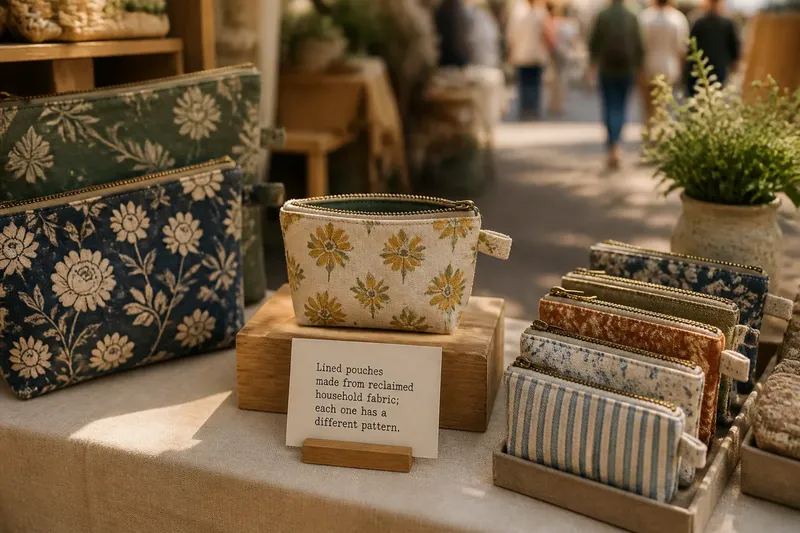
A sample fits when a finish, fibre or ingredient is difficult to judge from the finished object alone. A small swatch of woven cloth lets someone compare the feel and weight of linen with a smoother synthetic fabric. A tile showing glaze on the same clay body can make colour and texture easier to see than a written claim about the surface.
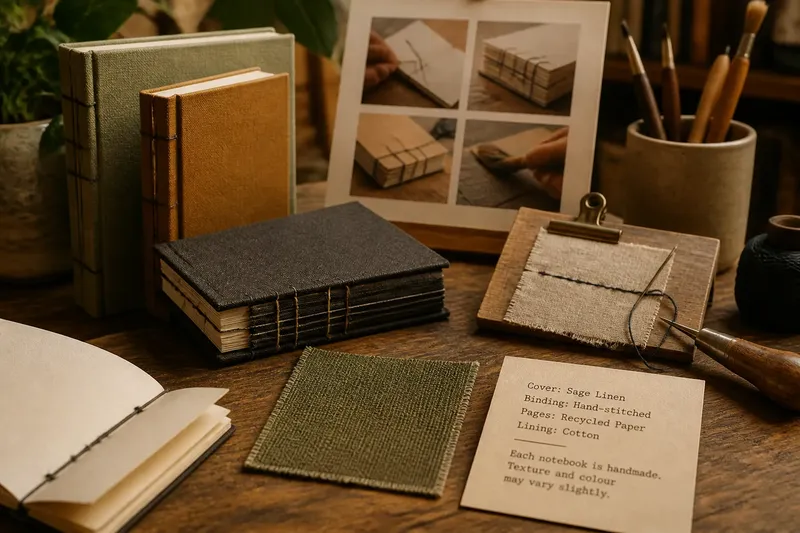
Keep a sample close enough to the finished piece that visitors can make the connection. If the object is made from several materials, show only the part that answers a likely question: a leather offcut beside a stitched notebook, for instance, rather than a tray of unrelated scraps. A sample should clarify what the item is made from, not imply that every piece is identical.
Say plainly how the sample relates to the object. It could be from the same batch, a material swatch supplied by a maker or a representative piece from the process. If colour, grain or texture varies, explain that variation instead of presenting the sample as an exact preview.
Samples suit work where touch or comparison carries useful information, such as yarn, paper, timber or surface finishes. They fit less well when handling could damage a delicate piece, when the material’s origin cannot be described accurately, or when the sample distracts from the object. In those cases, a clear description or a demonstration may do more.
Demonstrate a process when workmanship is the hidden value
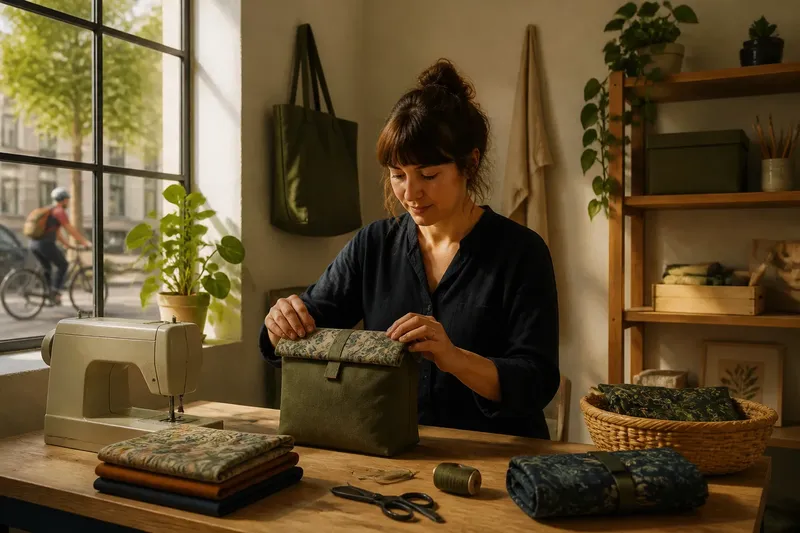
Use a demonstration when the important part of the work is a sequence of decisions or actions that disappears in the finished object. A maker can show how a brush lays down a controlled line, how a seam turns neatly at a corner, or how a block print transfers ink to paper. The point is not to perform a whole production run; it is to make one relevant feature visible.
Choose a small, repeatable action that does not put the object, audience or maker at risk. A demonstration should show a genuine part of the process, using the same kind of material and method that the finished work involves. If the display is a simplified version, name that difference rather than letting visitors assume they have seen the full production process.
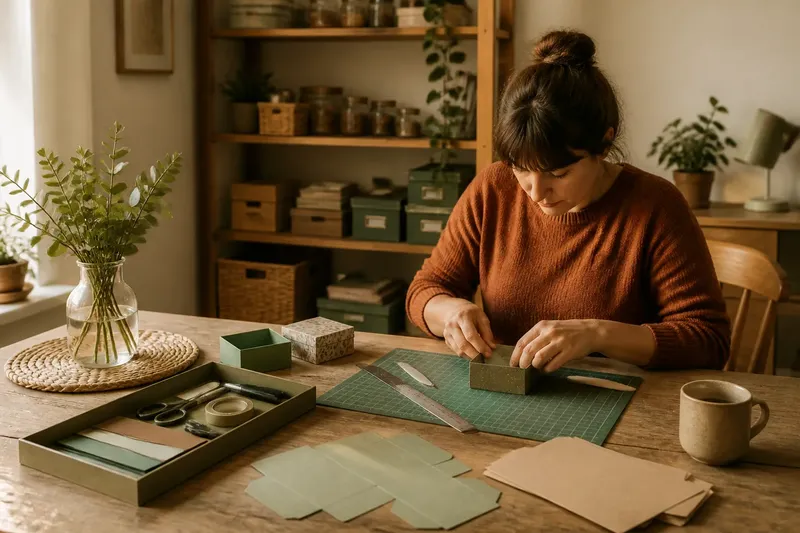
Demonstrations are useful when a visible result invites a question such as “How is that edge finished?” They are less useful when noise, fumes, heat, sharp tools or crowding make the setting unsuitable. In those circumstances, show a sequence of process photographs or a prepared sample instead. Safety-critical activities should be left to suitable settings and qualified guidance, not improvised as a sales display.
Keep the explanation attached to what visitors can observe. Point out the mark left by a tool or the way two materials meet; avoid claiming that a particular technique makes an item superior unless you can explain the specific difference. Workmanship is easier to assess when the viewer can see the feature for themselves.
Write a description when a display cannot carry the full story
A description fits when the object’s qualities are not fully visible or when a person needs information before handling it. A card can name the material, describe a finish, identify a practical detail or explain what varies between pieces. Keep statements specific: “hand-sewn cotton lining” tells a visitor more than “made with care”.
Use ordinary words for materials and methods, then explain unfamiliar terms briefly. If a bowl has a matte glaze, say that the surface is softly reflective rather than relying on a specialist label alone. If a paper item uses recycled stock, describe that fact without suggesting properties the paper may not have.
Descriptions also matter when a sample or live demonstration is impractical. A maker selling online can photograph a seam close up, show the reverse side of a woven piece or include a short caption about how the finish is applied. The image and words should describe the actual item or clearly state where a pictured piece is representative rather than identical.
Do not turn the card into a defence of the price. Explain what someone can inspect and let them weigh that information against their own needs. A good description opens a conversation; it does not dictate the object’s personal or emotional value.
Match the explanation to the visitor’s situation
The same object may need different forms of evidence in different settings. At a busy craft market, a sturdy material swatch and a short spoken explanation can work better than a long card. In a quiet gallery shop, a concise label may give someone time to inspect the piece without needing to ask. Online, close photographs and a clear note about variation can replace touch, though they cannot fully reproduce it.
Imagine a maker selling hand-bound notebooks at a small indoor fair. Visitors pause over the covers but cannot tell whether the texture comes from paper or cloth. The maker places one offcut beside the notebooks and adds a card naming the cover material and the stitched binding. A visitor can compare the sample, inspect the spine and decide whether those features matter to them; the display has supplied evidence without making a promise about what the notebook is worth to everyone.
When a visitor asks a specific question, answer that question before adding background. If they ask whether the glaze is smooth, describe or demonstrate the surface. If they ask how the fabric behaves, point to a swatch and explain what it can and cannot show. This keeps the exchange useful rather than turning every interaction into the same pitch.
What should a maker show first?
What if visitors can see the object but not its material?
Start with a sample or a close view that makes the material identifiable. Add a brief description if the material’s name alone would not explain its texture, finish or variation.
What if the object looks simple but takes skill to make?
Show one distinctive, observable part of the process, such as a joint, stitch or repeated mark. A small demonstration or process image is more useful than a broad claim about how difficult the work is.
What if people cannot handle the work?
Use a representative sample, a close photograph or a description that names the detail they would otherwise inspect by touch. Make clear whether the sample is the finished item, a material offcut or a separate demonstration piece.
What if a visitor still does not see the value?
Answer questions accurately, then let the visitor make their own judgement. Not every person values the same material, technique or finish, and an explanation should inform that decision rather than press for agreement.
Keep the evidence accurate and easy to inspect
Before displaying a sample, demonstration or description, check that each one refers to the item being sold. Look for a mismatch between the sample’s finish and the finished work, a photograph that hides a variation, or wording that makes a limited process sound universal. Ask someone unfamiliar with the work what they can tell from the display; if they infer something inaccurate, revise the display rather than blaming the viewer.
- Place a sample beside the object it represents, and identify any difference between them.
- Name the material and the relevant feature, such as texture, finish or construction.
- Show one genuine process detail instead of making a general claim about skill.
- Make photographs clear enough to inspect the feature described in the caption.
- Remove any wording that promises identical results when natural or handmade variation is present.
Let the price follow the explanation rather than carry it. A material sample can reveal texture, a demonstration can expose a hidden decision, and a description can supply context where neither is practical. Showing an object’s worth before its price is a matter of choosing the evidence that best helps a particular visitor understand the work—and accepting that understanding does not require everyone to value it in the same way.